
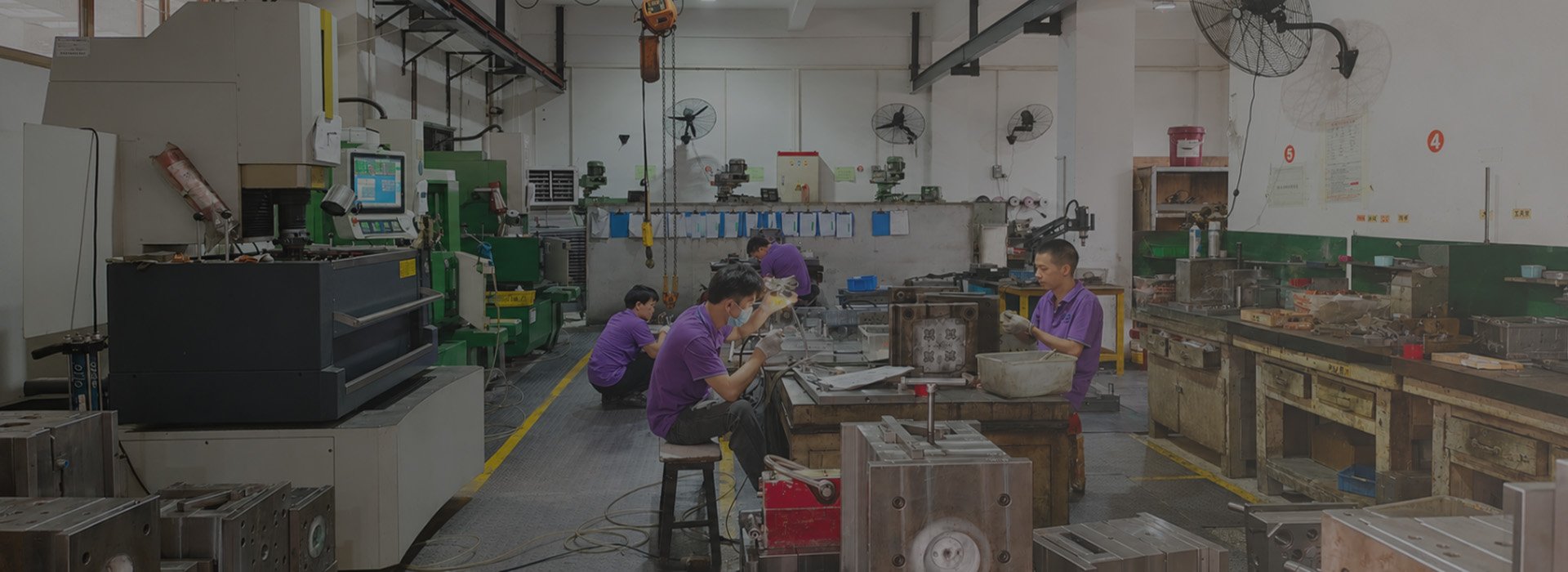
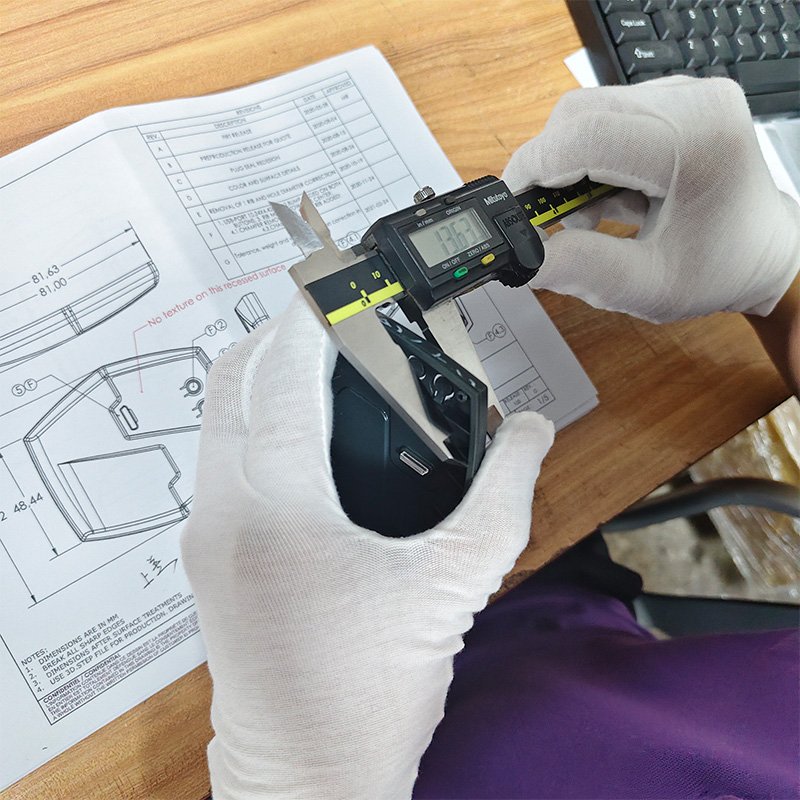
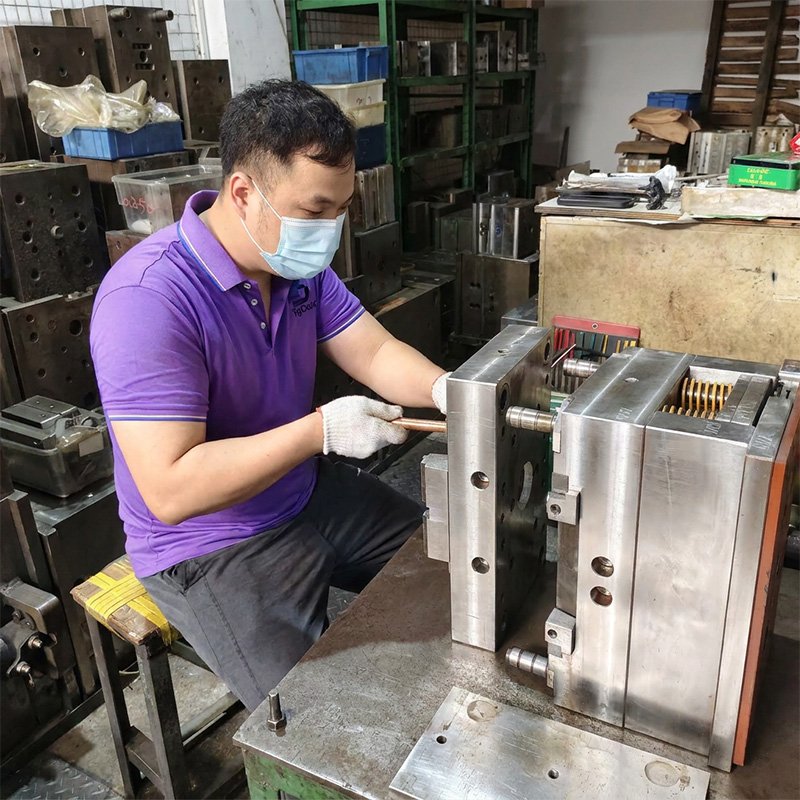
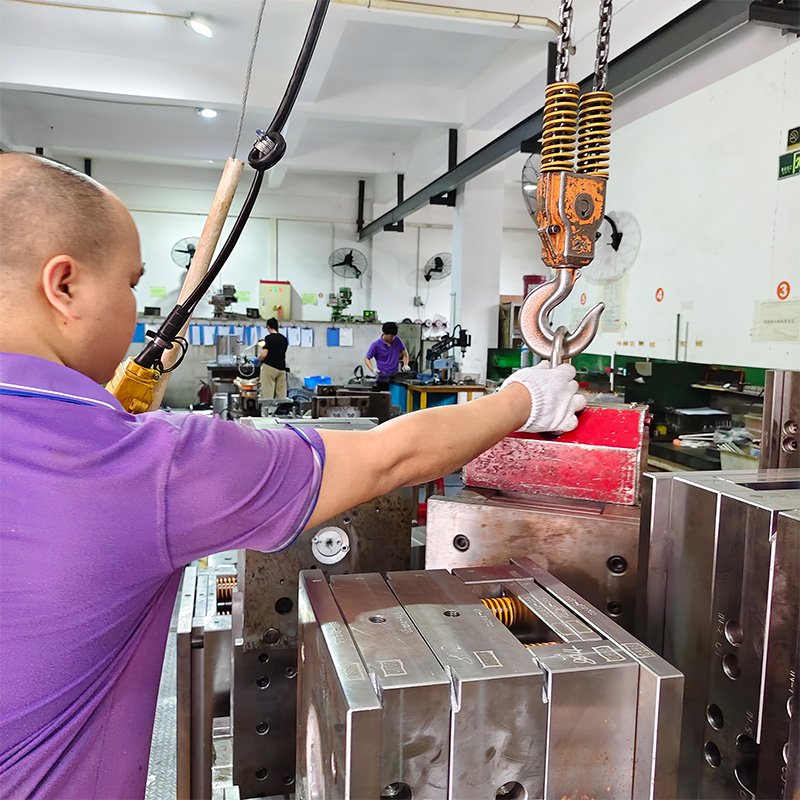
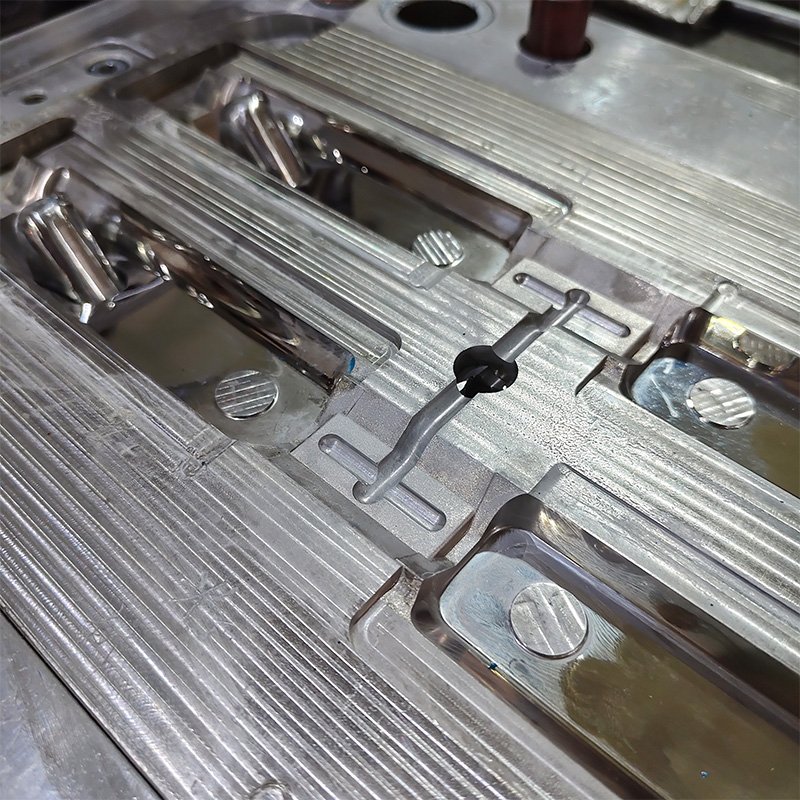
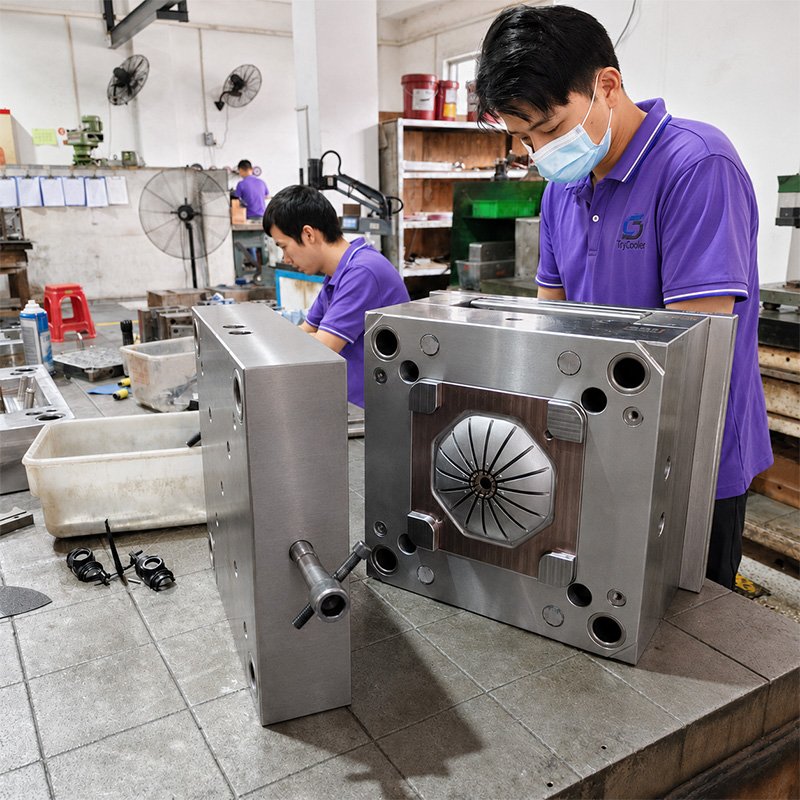
What Our Mold Making Service Includes
- Review part structure and production needs before tooling.
- Design mold structure based on part, material and cavity plan.
- Manufacture molds with CNC, EDM, wire cutting and fitting.
- Validate T1 samples for size, appearance and assembly.
- Optimize the mold based on sample results and feedback.
- Support trial production, mass production, inspection and packaging.
Why You Need a Mold Risk Review Before Tooling?
- 3D CAD does not always mean your part is mold-ready.
- Low tooling cost may hide production risks.
- Lack of DFM can lead to more T1 changes.
- Good samples still need production validation.
- Separate tooling and molding suppliers may create responsibility gaps.

What Is Injection Mold Making
Injection mold making converts your plastic part design into a production-ready tool for repeatable injection molding. Before tooling begins, the part is reviewed for wall thickness, draft angle, undercuts, gate location, parting line and assembly risks.
After mold design, the tool is manufactured by CNC, EDM, wire cutting, polishing, fitting and assembly, then verified through T1 trial samples before production.
Mold Types Based on Production Plan
Different product stages require different tooling solutions. We help choose the right mold type based on your part design, expected volume, material, cost target and long-term production needs.
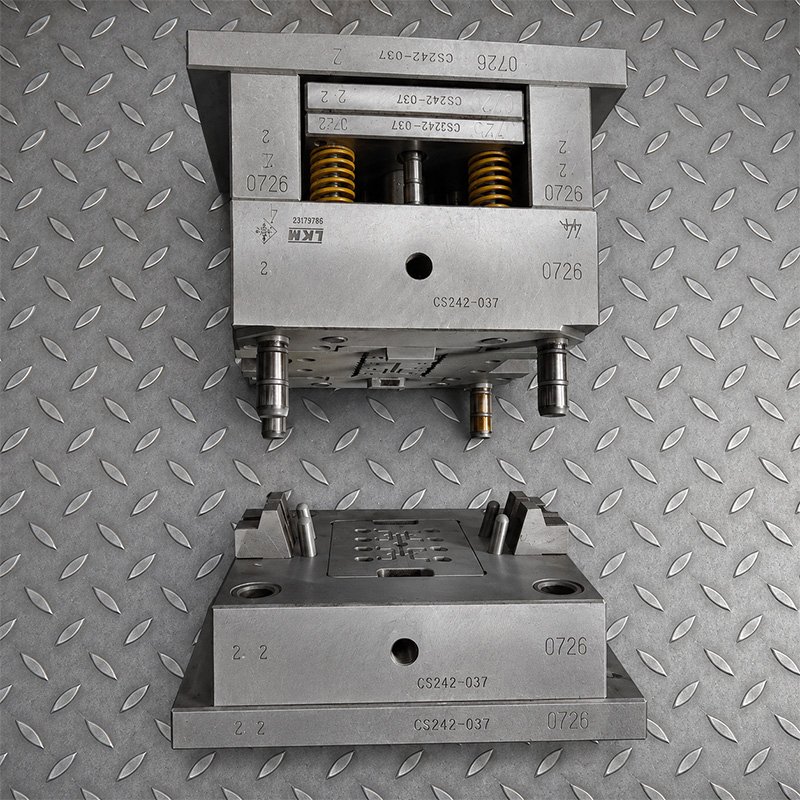
For product validation, functional testing and low-volume trial production before investing in full production tooling.
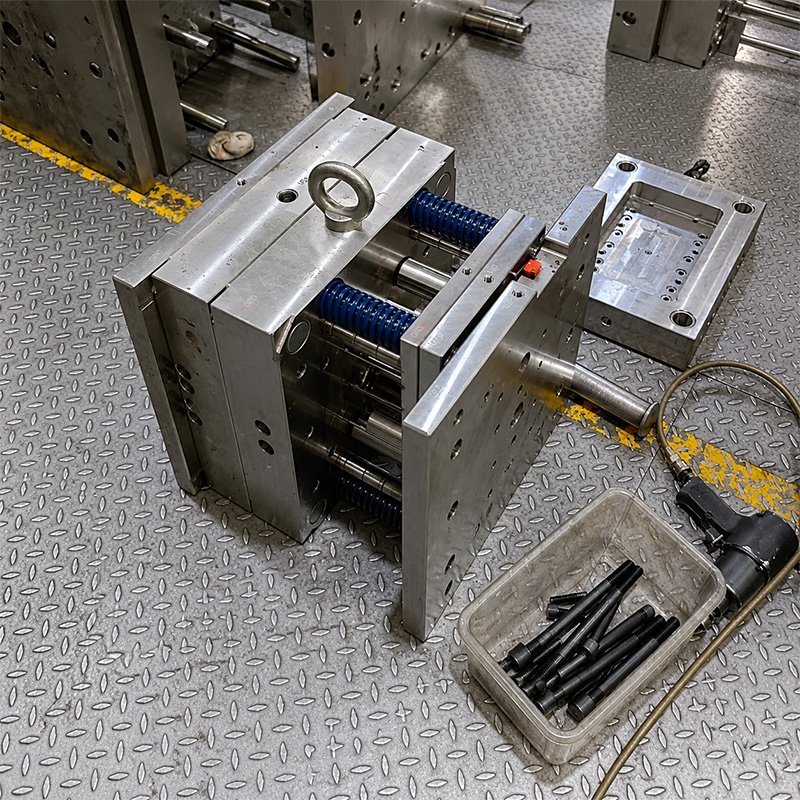
Built for stable long-term injection molding production, with mold structure, steel and cooling design selected based on expected volume.
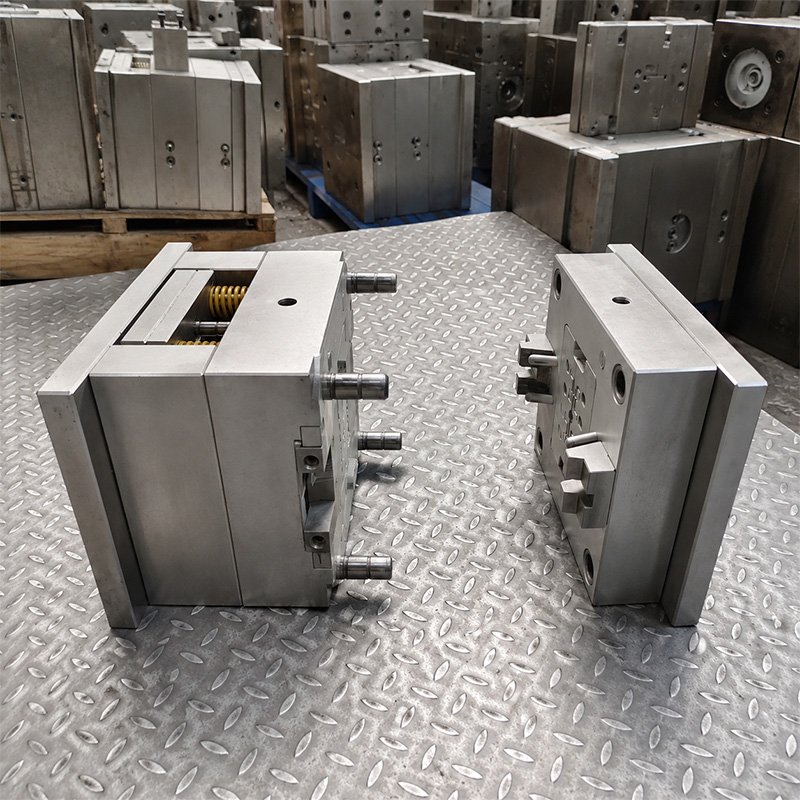
Designed to improve production efficiency and reduce unit cost, especially when part structure, material and molding balance are suitable.
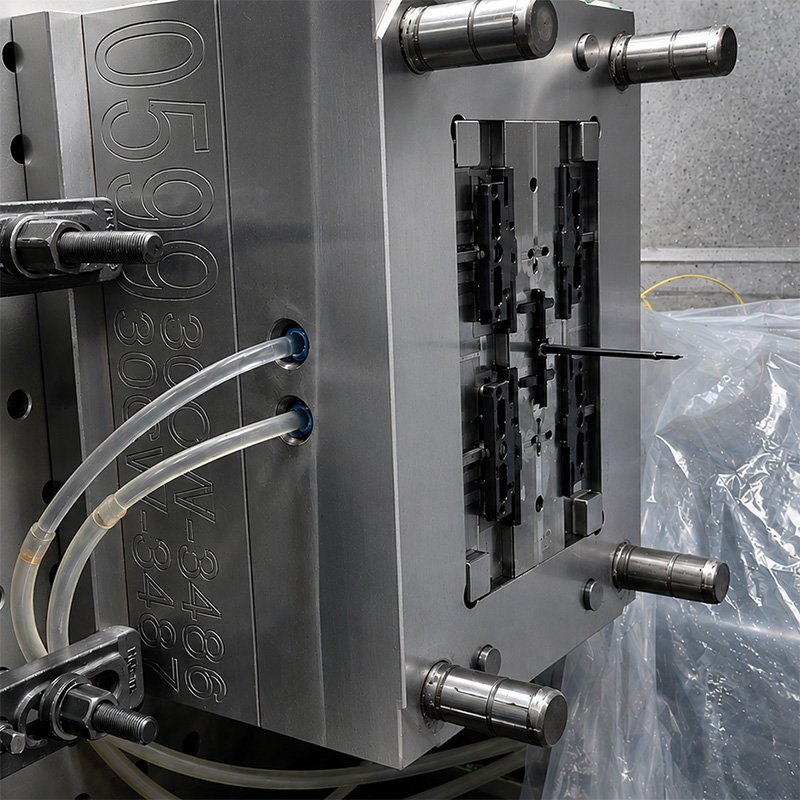
For plastic parts combined with metal inserts, soft-touch materials, two colors or two materials, with careful review of bonding and positioning risks.
Mold Advantages
We help you turn custom plastic part designs into practical, production-ready mold solutions. From tooling strategy to long-term mold support, our goal is to make your mold project easier to manage and more reliable for production.

We support custom mold projects from product idea to stable injection molding production.

Mold making and injection molding are managed under one roof for clearer communication.

We support prototype molds, production molds and multi-cavity molds based on your production plan.

We provide mold storage, maintenance and production support for repeat orders.
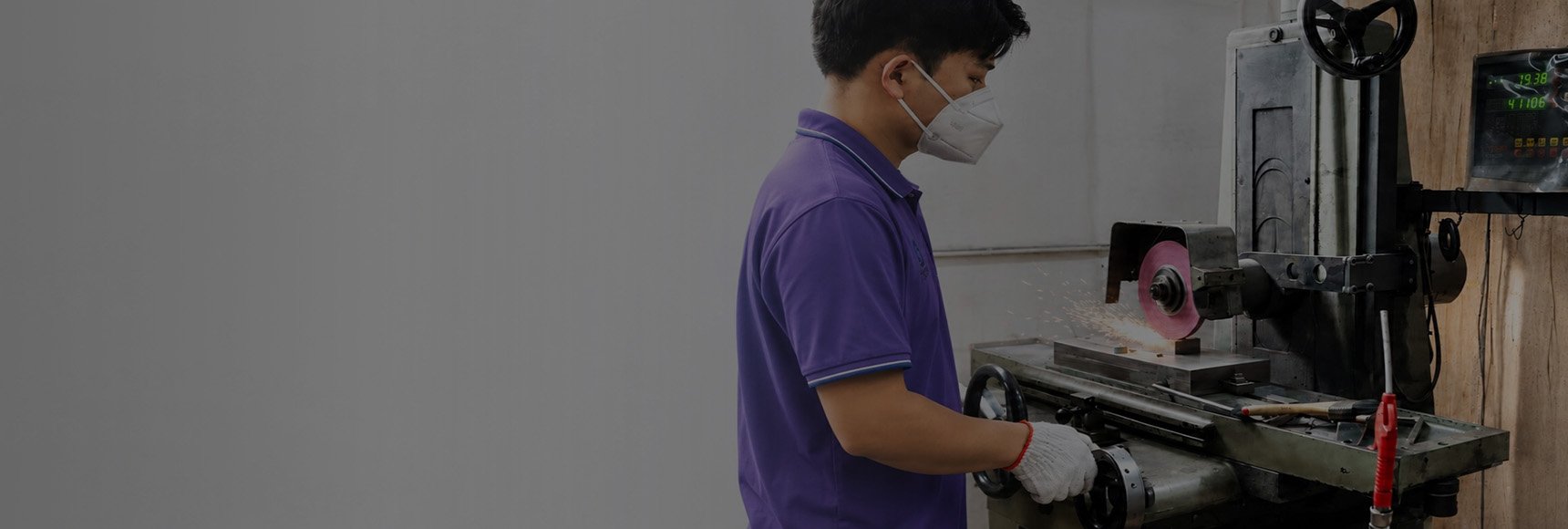
Material and Mold Steel Selection Support
We help match plastic material, mold steel, surface finish and inspection requirements based on your product application, production volume and cost target.
- Plastic Materials
- Mold Steel
- Surface Finish
- Quality Data
- DFM Review Before Tooling
ABS, PP, PC, PA, POM, PMMA, TPE, TPU, PBT, PPS
| Material | Typical Applications | Key Properties |
| ABS | Electronic housings, consumer products, appliance parts | Good balance of strength, impact resistance and cost |
| PC | Transparent parts, protective covers, electronic components | High impact strength, heat resistance, transparency |
| PP | Household products, automotive parts, chemical-resistant components | Lightweight, chemical resistance, cost-effective |
| PA / Nylon | Gears, bushings, mechanical components | High strength, wear resistance, good durability |
| POM | Precision parts, gears, sliding components | Low friction, dimensional stability, excellent wear resistance |
| PMMA | Optical covers, light guides, transparent parts | High transparency, good appearance, excellent optical performance |
| TPE / TPU | Soft-touch parts, grips, seals, overmolded components | Flexible, elastic, soft-touch performance |
| PBT / PPS | Electrical components, high-temperature applications | Heat resistance, dimensional stability, engineering performance |
P20, 718, H13, S136, NAK80
| Mold Steel | ||
| Mold steel is selected based on production volume, material, surface finish and mold life requirements. | ||
| Mold Steel | Suitable For | Key Point |
| P20 | General plastic molds, prototype molds | Cost-effective for common plastic parts. |
| 718 | Medium-volume molds, plastic housings | Better stability and polishability than P20. |
| H13 | Glass fiber materials, high-wear projects | Good wear resistance and durability. |
| S136 | Transparent parts, high-polish molds | Suitable for PC, PMMA and corrosion-resistant needs. |
| NAK80 | Precision and cosmetic parts | Good for high-gloss and appearance-sensitive parts. |
| Note: Final mold steel should be confirmed based on your drawing, material, quantity and surface requirements. | ||
Polishing, Texture, Painting, Pad Printing, Laser Engraving
| Surface Finish | Typical Applications | Key Benefits |
| Polishing | Transparent parts, optical components, high-gloss surfaces | Improve surface smoothness and achieve mirror-like appearance |
| Texture | Housings, automotive interiors, consumer products | Improve appearance, hide minor defects and enhance grip |
| Painting | Decorative parts, branded products, appearance components | Add colors, protective layers and premium surface effects |
| Pad Printing | Logos, symbols, product markings | Add detailed graphics and brand identification |
| Laser Engraving | Serial numbers, logos, permanent marks | Provide durable and precise identification |
| SPI Surface Finish | Cosmetic parts requiring consistent appearance | Control surface quality and meet appearance requirements |
Tolerance, Inspection Method, Sample Approval Standard
| Quality Item | What We Check | Customer Benefit |
| Dimensional Accuracy | Critical dimensions, tolerances and key features | Ensure parts fit your assembly requirements |
| Inspection Methods | CMM, caliper, height gauge and visual inspection | Verify part quality with reliable measurement methods |
| T1 Sample Validation | Appearance, dimensions, assembly and functional checks | Reduce risks before mass production |
| Quality Standards | Inspection criteria and approval requirements | Keep production quality consistent |
| Mold Trial Records | Trial results, adjustments and improvement feedback | Provide clear project tracking and validation |
| DFM Review Before Tooling | |||
| Before tooling, our engineers review wall thickness, draft angle, undercuts, gate location, parting line, ejection and assembly risks. | |||
| No. | Inspection Item | Inspection Content | Core Purpose |
| 1 | Wall Thickness Review | Check thick sections and uneven walls | Reduce sink marks, warpage and long cooling cycles |
| 2 | Draft Angle Check | Review draft angle | Support smooth mold release and reduce scratches, drag marks or ejection damage |
| 3 | Undercut Analysis | Identify undercuts early | Suggest sliders, lifters or design changes when needed |
| 4 | Gate Location Review | Evaluate gate position | Improve filling balance, appearance control, strength and weld line position |
| 5 | Parting Line Evaluation | Review parting line position | Balance mold release, cosmetic surface requirements and secondary finishing |
| 6 | Ejection Design Check | Check ejector layout | Reduce deformation, ejector marks and part damage during demolding |
| 7 | Material Suitability Review | Review material choice based on shrinkage, strength, temperature resistance, transparency, flexibility or flame-retardant needs | Ensure material matches product performance requirements |
| 8 | Tolerance and Assembly Risk Check | Check critical dimensions, screw bosses, snap fits and assembly gaps | Ensure repeatable production and smooth assembly |
How to Start Mold Project with Us?
Send your 3D drawing, 2D drawing, sample, photos, material requirement and estimated quantity for initial review.
We review the basic part structure, material feasibility, tooling direction, estimated cost range and project timeline.
Our engineers review wall thickness, draft angle, undercuts, gate location, parting line, shrinkage, warpage, assembly and tolerance risks before tooling.
After mold structure is confirmed, we move to mold design and manufacturing, including CNC, EDM, wire cutting, polishing, fitting and assembly.
T1 samples are molded and checked for dimensions, appearance, assembly and molding stability. If needed, we adjust the mold before approval.
After sample approval, we support trial production, mass production, quality inspection, packaging and shipment.
We usually need a 3D drawing such as STEP or STP for accurate evaluation. If available, please also provide 2D drawings, material requirements, surface finish, estimated quantity and application details. Samples, photos or sketches with dimensions are also helpful for early review.
Yes. Before tooling starts, our engineers review wall thickness, draft angle, undercuts, gate location, parting line, ejection, shrinkage, and assembly risks. This helps reduce unnecessary mold changes after T1 samples.
Mold lead time depends on part size, structure complexity, cavity number, steel selection and modification requirements. After reviewing your drawing, we can provide a more realistic tooling timeline and project schedule.
Mold cost is affected by part size, structure complexity, cavity number, mold steel, sliders, lifters, surface finish, tolerance and expected production volume. We recommend a tooling plan based on your production needs, not only the lowest mold price.
T1 samples are used to check dimensions, appearance, assembly and molding stability. If issues are found, we analyze whether they come from product design, mold structure or molding process, then suggest proper mold modification before production.
Yes. We can suggest suitable materials based on product strength, appearance, flexibility, transparency, temperature resistance, flame-retardant needs and application environment. Common options include ABS, PP, PC, PA, POM, PMMA, TPE, TPU and other engineering plastics.
For molds used in our factory for injection molding production, we can provide mold storage and maintenance support based on the agreed production plan.
Yes. We understand custom mold projects often involve confidential product designs. NDA or NNN agreements can be signed before reviewing drawings, samples or project details, and customer files will be handled as confidential project information.