
Avoid Failures in Custom POM Parts
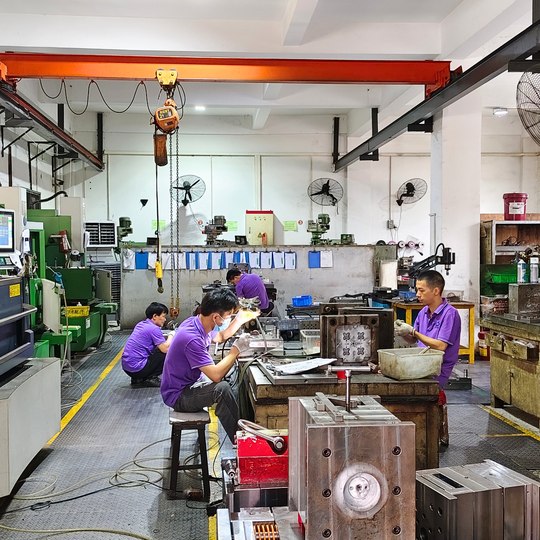
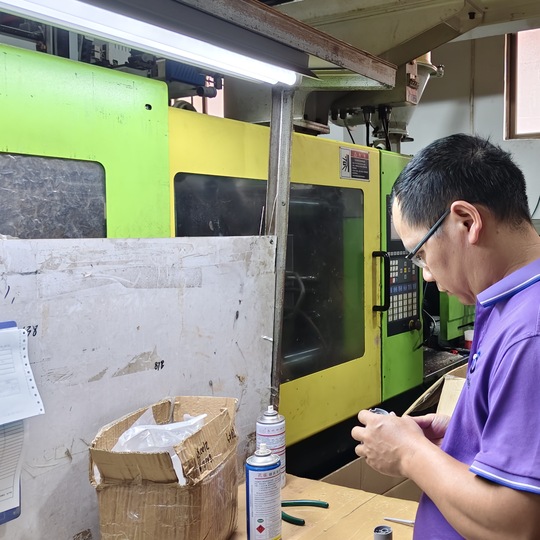
In custom POM injection molding, some issues appear only after assembly or during field use. Before the mold is built, our engineers review the conditions that can affect durability, fit and compliance.
- Check grade compatibility when exposed to heat, humidity, acids or chemicals.
- Control shrinkage in POM bushings and POM rollers to maintain running clearance.
- Keep POM gears accurate and round for quieter, longer-lasting meshing.
- Balance packing in thick-walled acetal parts to reduce centerline void risk.
- Confirm low-emission grades and food-contact documentation for POM plastic products.
Find the Right POM Part for Your Application
TryCooler delivers custom POM parts with flash removed and mating surfaces prepared for assembly, reducing the manual finishing required on your side. Whether you need low-friction POM gears, bushings, and rollers or a complex precision housing, we support your project from prototype validation through volume production.
Ready to move forward? Send your drawing or sample to discuss your project and request a quote.
EXPLORE POM PART TYPES ↓
Custom POM Parts We Manufacture
Explore the custom POM parts TryCooler manufactures for industrial equipment and precision assemblies, engineered for low friction, high wear resistance, and reliable fit.
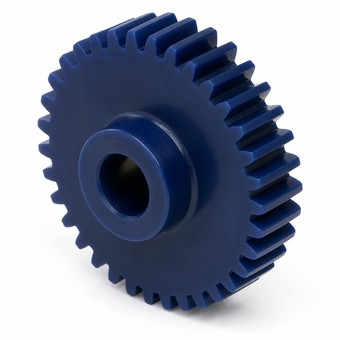
Spur gears, gear wheels, pulleys, and ratchet components for mechanisms that depend on controlled tooth form, concentricity, and meshing clearance.
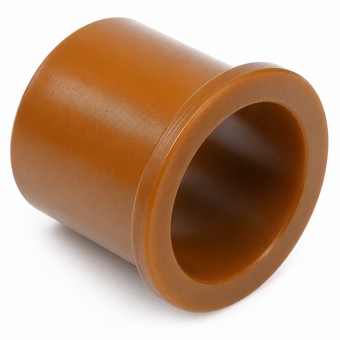
Bushings, sleeves, washers, and bearing cages for rotating assemblies where bore size, roundness, and shaft clearance need close control.
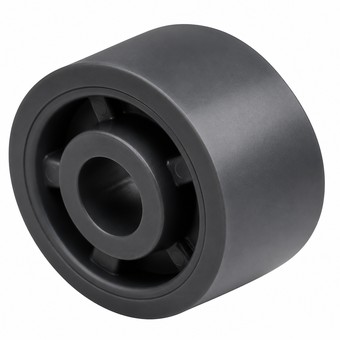
Guide rollers, conveyor rollers, slide rails, and wear strips for repeated travel, low-friction contact, and controlled alignment.
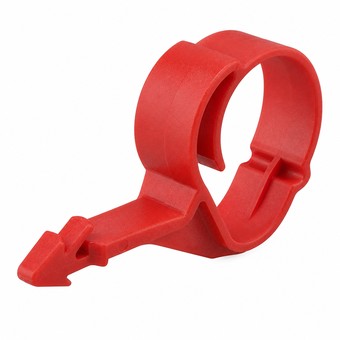
Retaining clips, snap-fits, latch parts, and release features for products that must assemble reliably and operate repeatedly.
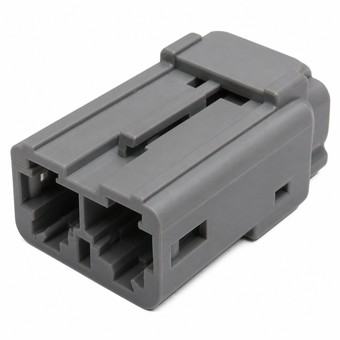
Connector housings, terminal supports, cable guides, and insulating parts where slot accuracy, flash control, and mating fit are important.
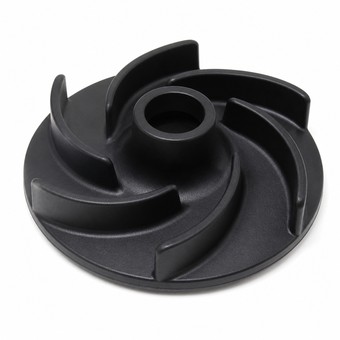
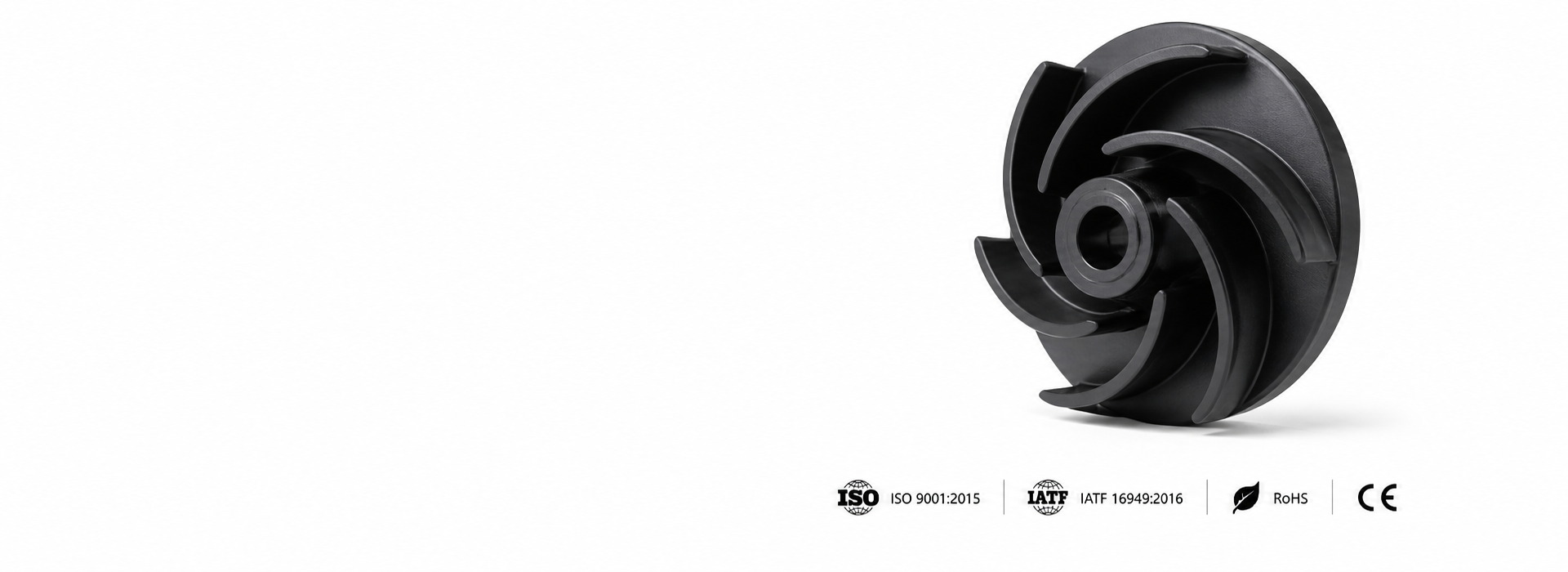
Impellers, valve seats, fittings, and actuator components evaluated for your media, temperature, sealing surfaces, and service conditions.
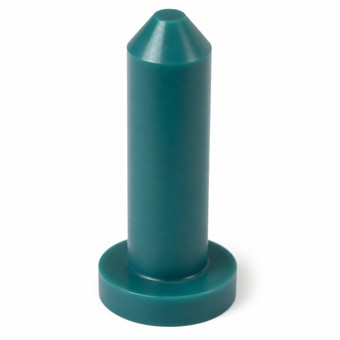
Locating pins, stops, guide blocks, alignment features, and functional brackets that position parts accurately during assembly or operation.
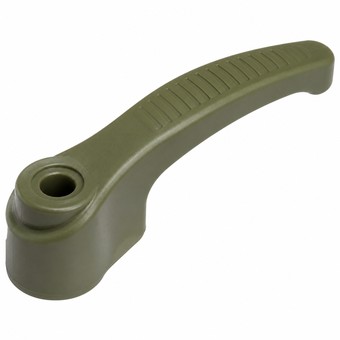
Levers, triggers, release buttons, and other custom acetal parts made around your drawing, mating components, and repeat-use requirements.
Custom Precision POM Parts from a Reliable Manufacturer
Custom POM injection molding combines the engineering strength of acetal with a manufacturing partner that truly delivers.

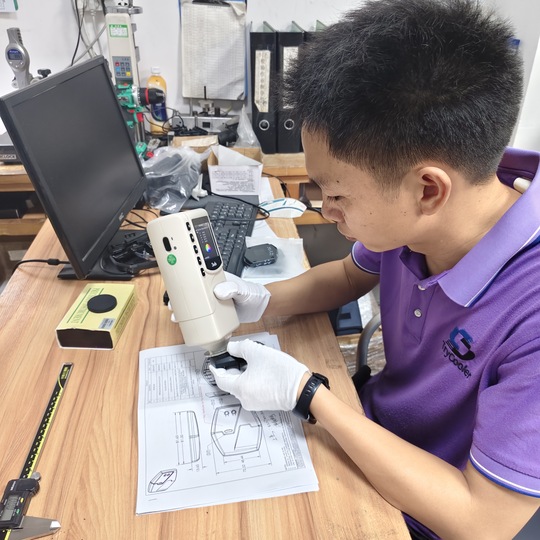
POM stays dimensionally stable, so custom POM parts hold tight tolerances every time. We hold critical features to ±0.01 mm, ship a FAIR report on the first article, and inspect at IQC/IPQC/FQC/OQC.

Unlike nylon, POM barely absorbs moisture, with no swelling or drift in humid environments. We pick the right grade, tune packing at T1, check critical dimensions every 2 hours in production, and certify every lot.

POM is self-lubricating. POM gears and rollers run quietly and wear slowly. We keep gear teeth accurate and round, recommend PTFE-filled POM for extreme wear, and can add metal shaft inserts.

POM parts replace brass, steel, and aluminum at lower cost and weight. DFM finds savings before tooling, multi-cavity molds spread tool cost, and secondary operations stay in-house.

Injection molding wastes far less than machining. DFM trims wall thickness and runners, controlled processing cuts rejects, and material yield stays high.

POM offers FDA food-contact grades and low-emission formulations. We can supply material certificates, RoHS/REACH documentation, and food-contact declarations. Compliance ready before mass production.
CNC Machining With POM Parts
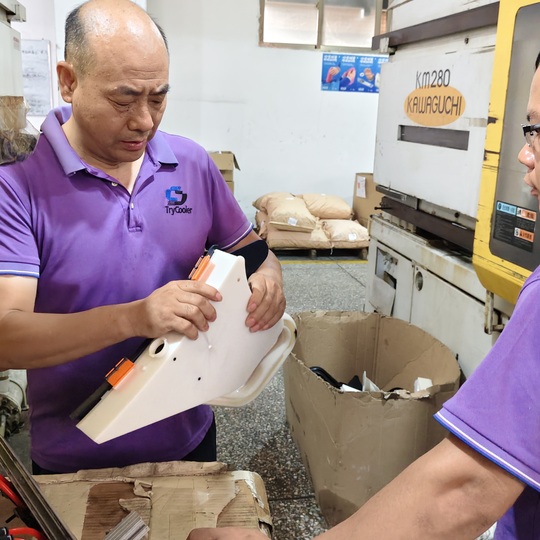
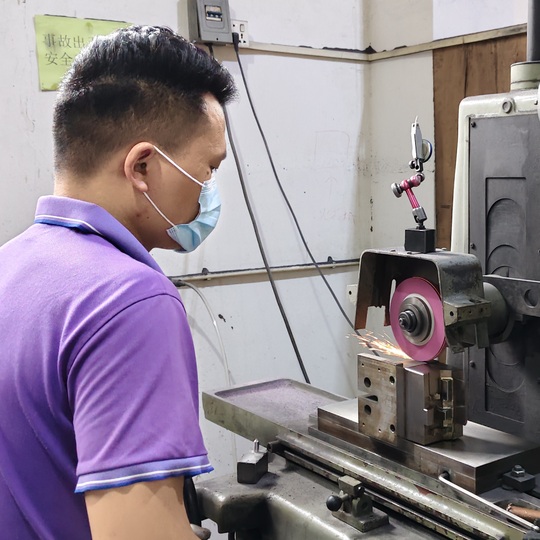
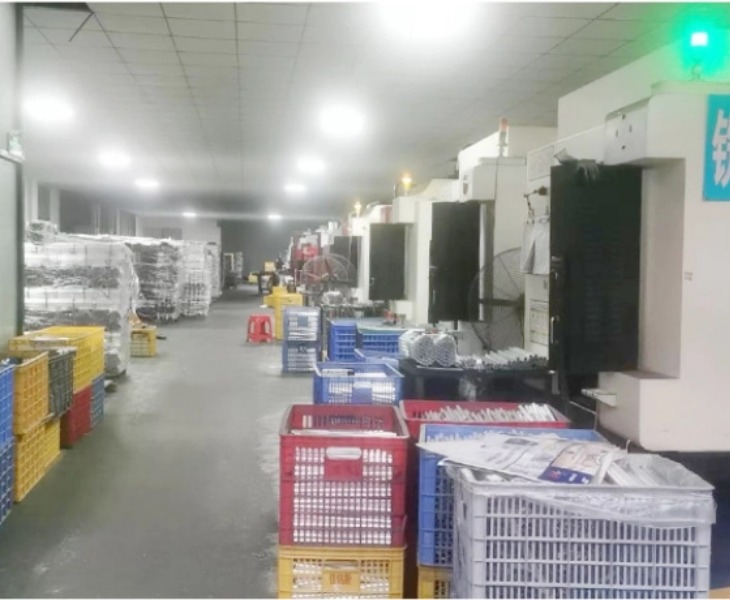
At TryCooler, our CNC workshop mills, drills, and turns solid POM stock to produce custom POM gears, bushings, rollers, and other functional parts without requiring a mold, supporting prototype and trial production for your project.
- TryCooler machines complex one-piece structures without the draft angles or mold-release features required for injection molding.
- We machine parts directly from solid POM stock, creating a continuous, uniform material structure with no injection-molded weld lines or sink marks.
- Our programming team updates machining programs from your revised design files to support multiple prototype iterations.
- TryCooler controls agreed tolerances throughout machining for POM parts used in sliding and rotating applications.
Injection Molding With POM Parts
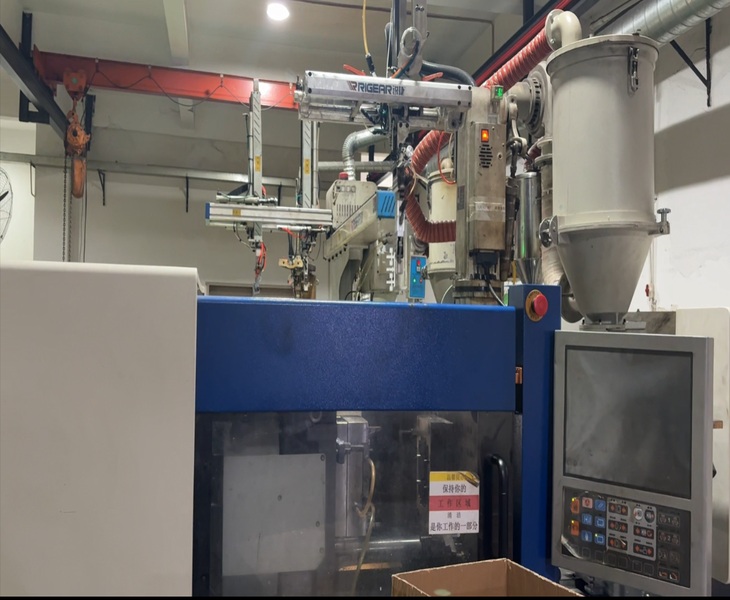
When your POM parts move into volume production, our injection molds are designed around material shrinkage and surface requirements to help maintain stable geometry and a consistent appearance from batch to batch.
- Stable high volume production of custom POM parts, with consistent appearance and overall dimensions across each batch.
- Functional details on POM gears and other parts, including tooth profiles, locating pins, and reinforcing ribs, molded as one piece without visible assembly seams.
- Deep recesses, hollow sections, and other internal features formed directly in the mold, reducing or eliminating manual finishing before delivery.
- An even molded surface, specified as a smooth gloss or a uniform matte grain texture to suit the application.
POM Parts for Critical Applications
The following case studies explore how POM parts are engineered for real-world applications.
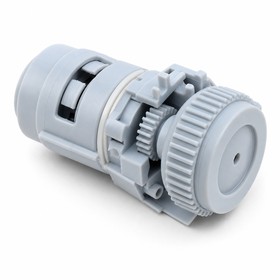
A disposable insulin pen required precision ratchets and POM gears with consistent dial feel, low friction, and repeatable dose setting. We selected a suitable POM-C grade, maintained lot-level traceability, and verified actuation force and dose accuracy at first article.
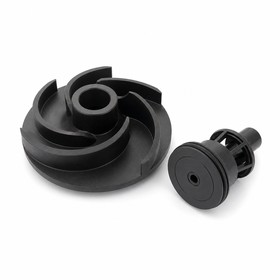
A centrifugal pump impeller and valve set operated continuously at elevated temperature in specified weak-acid and alkaline media. The previous POM-H parts cracked within 4–6 months, causing valve-seat leakage. After media-specific testing, we moved to POM-C, refined the wall structure and packing, and extended service life to more than 18 months.
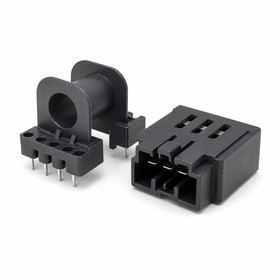
Industrial relay components required stable mating force after thousands of insertion cycles in humid conditions. Previous nylon parts absorbed moisture and changed the fit. After reviewing the operating limits, we selected acetal, used a 16-cavity balanced-flow tool, and checked mating force and critical dimensions at first article.

What We Review for Your Custom POM Parts
- POM Material Direction
- Part Features That Need Early Review
- POM T1 Validation Checklist
| Your Requirement | POM Direction to Review | What We Confirm Before Tooling |
| Repeated sliding or rotational contact | Wear-resistant or internally lubricated POM | Mating material, load, speed, and lubrication condition |
| Higher impact demand | Toughened POM | Impact area, required stiffness, and service temperature |
| Outdoor exposure | UV-stabilized POM | UV exposure, color requirement, and expected service conditions |
| Thick sections or fluid exposure | POM-C or another suitable material direction | Wall thickness, actual media, temperature, and exposure time |
| Low odor or food-contact requirement | Low-emission or compliance-supported grade | Target regulation, supplier documentation, and testing requirement |
| Part Feature | What We Review Before Tooling | What It Helps Protect |
| POM Gears | Tooth profile, concentricity, gate location, and inspection datum | Smooth meshing, lower noise, and repeatable motion |
| POM Bushings and POM Rollers | Bore size, wall balance, roundness, and mating-shaft clearance | Stable rotation and batch-to-batch running clearance |
| Thick Hubs or Solid Sections | Core-out options, gate position, packing, and cooling balance | Lower risk of sink, centerline voids, and internal cracking |
| Clips and Latches | Root geometry, draft, ejection direction, and repeated-use condition | Assembly force and fatigue performance |
| Valve or Fluid Components | Material suitability, sealing surfaces, and interface dimensions | Functional fit with the approved media and mating parts |
| What Must Work | T1 Review Focus | What We Need from You |
| Smooth POM Gear Meshing | Tooth profile, bore size, concentricity, and potential gate influence | Mating gear, center-distance requirement, or test condition |
| Stable Bushing or Roller Movement | Inner/outer diameter, roundness, runout, and running clearance | Mating shaft, sleeve, or approved assembly dimensions |
| Sound Thick-Section Structure | Packing response, part weight, sink marks, and sectional inspection when required | Internal-defect acceptance criteria or critical-section information |
| Reliable Clips and Latches | Assembly force, root area, ejection marks, and repeated-use performance | Mating component and expected operating cycle |
| Correct Material and Compliance Direction | Approved resin grade, color, batch information, and required documentation | Material specification, regulation, or test requirement |
| Production-Ready Sample Approval | Critical dimensions, appearance criteria, and assembly result | Your T1 checklist, drawing revision, and approval standard |
Testimonial
Wear and dimensional drift in our POM rollers and bushings caused maintenance issues in 24/7 gym equipment. TryCooler recommended PTFE-filled POM for the rollers and improved shrinkage control for the bushings. Service life tripled, and peak-season deliveries stayed on schedule.
 Daniel BeckerProduct Development Manager
Our thick-walled acetal housing repeatedly failed drop tests due to centerline voids. Before tooling, TryCooler identified uneven wall thickness and proposed coring the heavy sections. They also supplied the internal POM gear set and silicone seal as one assembled unit. Our first article met requirements on the first trial.
 Sarah LindqvistR&D Manager
Our food-processing conveyor line undergoes daily alkaline washdowns, so we needed POM parts matched to our cleaning conditions and food-contact documentation requirements. After early failures with our previous supplier, TryCooler supplied a POM-C grade with the requested records. The parts have now run for over a year.
 Michael O'SullivanProcurement Manager
Yes. Our POM gears can be produced to AGMA Class 8–10 tooth-profile accuracy and verified on a gear measurement machine. Before tooling, we use mold-flow review to optimize gate placement and roundness control for quieter meshing, stable tooth geometry, and longer service life.
POM typically shrinks 1.8–2.5% during molding. We compensate for grade, geometry, and flow direction in the tool design, then inspect critical bores and outside diameters against your assembly requirements. Post-molding stabilization is used where needed to help maintain the intended running clearance.
Yes. We mold POM compounds with PTFE, glass fiber, molybdenum disulfide, UV stabilizers, antistatic additives, and grades supported by food-contact documentation when required. The final material direction is confirmed around your application, operating conditions, and compliance requirements.
During DFM, we identify heavy sections and recommend wall balancing or coring where possible. At T1, we optimize gate location, packing, and mold-temperature control to support more uniform crystallization. For thick-section parts, we may recommend POM-C when centerline porosity is a concern, subject to the final application and material requirements.