


Clear Parts Planned for Appearance, Fit and Production
- Select the Material for Your Actual Application
- Define Critical Visible Surfaces Before Tooling
- Plan Gates, Weld Lines and Ejector Locations
- Match Mold Polishing to Your Surface Requirements
- Approve Appearance and Fit Through T1 Samples
- Protect Clear Surfaces During Handling and Packaging
What Is Transparent Injection Molding?
Transparent injection molding is a manufacturing process used to produce clear, tinted or translucent plastic parts from materials such as PC, PMMA, PETG and PS. It is commonly used for transparent housings, protective covers, display windows, LED components and other products where appearance and visibility are important.
Compared with ordinary plastic injection molding, clear plastic molding requires closer control throughout material selection, mold making and production. Material drying, equipment cleanliness, gate location, mold polishing, venting, cooling and part handling can all affect clarity and surface quality. These factors must be reviewed according to your product design, operating environment and approved appearance requirements to reduce visible defects such as bubbles, flow marks, black specks, haze and scratches.
Transparent Plastic Parts by Appearance and Performance
Choose the transparency, surface effect and functional performance required for your application. TryCooler will evaluate the suitable material grade, mold finish and production method based on your drawings and approved samples.
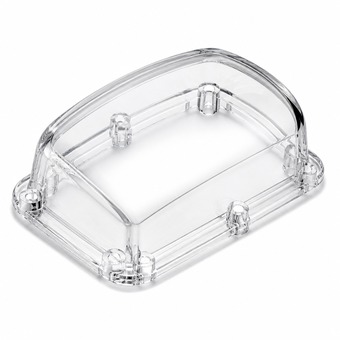
For covers, windows and housings that require clear visibility of internal displays, indicators or components.
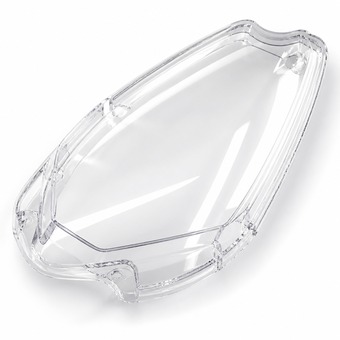
Mirror-polished mold surfaces help produce smooth, glossy transparent parts for appearance-sensitive products.
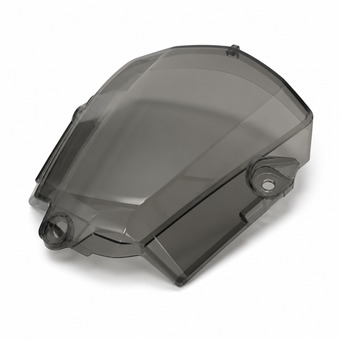
Transparent gray or tinted components can reduce direct visibility of internal structures while allowing displays or indicator lights to remain visible.

Custom transparent colors can be evaluated according to the selected material, actual wall thickness and approved color sample.
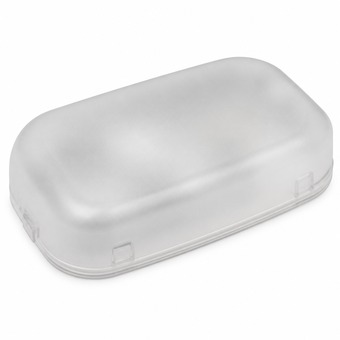
Matte or frosted surfaces soften visibility through the part and can help conceal internal components.
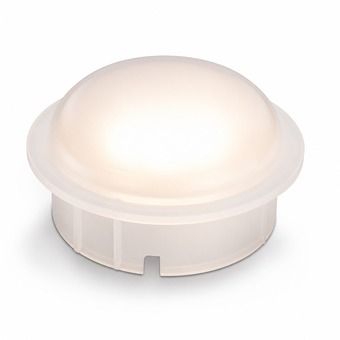
For LED covers and lighting components that need to distribute light more evenly rather than provide direct visibility.
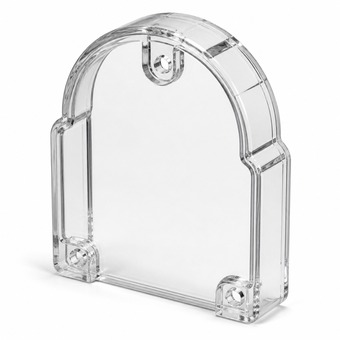
Clear PC and other impact-resistant grades can be considered for protective covers, guards and equipment windows exposed to mechanical impact.
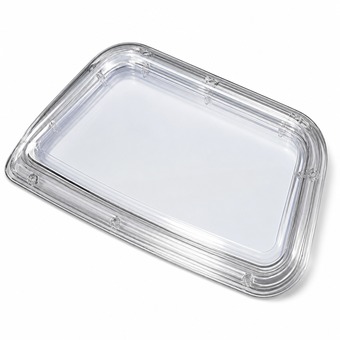
Suitable transparent grades can be selected for outdoor products where sunlight exposure, weather resistance and long-term appearance must be evaluated.
Advantages of Our Transparent Injection Molding Service
Transparent plastic parts must meet more than an appearance requirement. TryCooler combines material evaluation, DFM, in-house mold manufacturing and controlled production to help you balance clarity, structural performance, design freedom and project cost.

Transparent plastics can replace glass in suitable applications while reducing product weight and breakage risk. Injection molding also allows covers, mounting features, ribs, bosses, clips and other functional details to be formed in one part, helping you reduce separate components and simplify assembly.

We help you compare clear PC, PMMA, PETG, PS and other suitable material grades according to the required clarity, impact strength, heat resistance, UV exposure and chemical environment. Material recommendations are based on how your product will be used, rather than transparency alone.

The appearance of a transparent molded part depends heavily on the mold. TryCooler reviews visible surfaces, gate locations, parting lines, ejector positions and surface finish before mold manufacturing, then coordinates precision machining and polishing according to your approved appearance requirements.

A transparent part must do more than look clear. Its dimensions, assembly fit, snap features, screw bosses, sealing areas and load conditions must also work reliably. We evaluate these functional requirements together with appearance to reduce whitening, deformation and stress-cracking risks during assembly and use.

Transparent injection molding supports complex shapes and integrated functional features that may be difficult or expensive to produce with glass or separately assembled components. Our engineers review wall thickness, ribs, bosses, undercuts and draft angles to improve manufacturability without unnecessarily changing your product function.

The lowest mold price does not always create the lowest total part cost. We evaluate cavity count, mold steel, runner system, expected production volume and appearance requirements together, helping you choose a tooling solution that balances initial investment, part cost, mold life and repeat-production stability.
Mold Polishing for Clear Plastic Parts
A transparent material can only reproduce the surface created by the mold. Before mold manufacturing, TryCooler identifies your critical visible surfaces and confirms the required gloss, texture and acceptable locations for gates, parting lines and ejector marks.
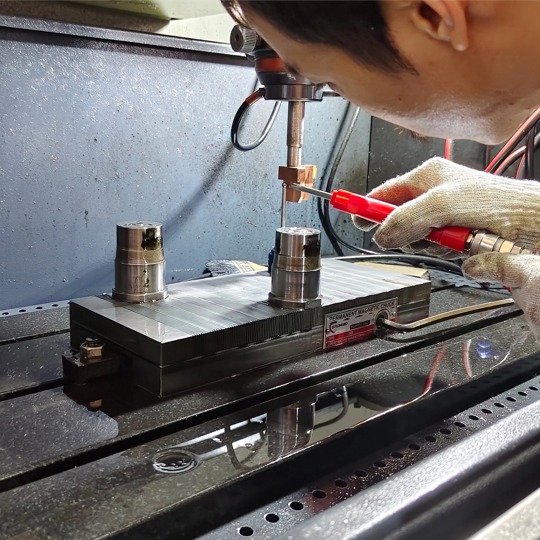
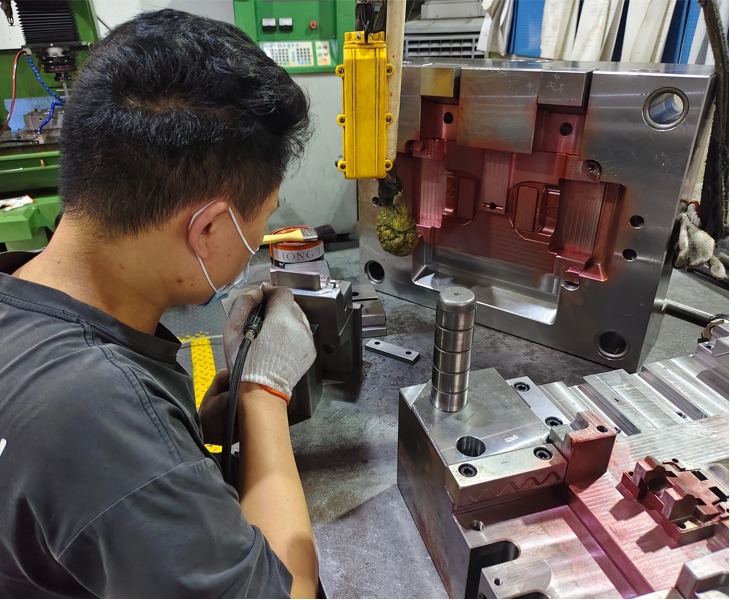
Our in-house team coordinates CNC, EDM, mold fitting and progressive polishing for the Core and Cavity. The final surface is evaluated through T1 molded samples rather than the polished mold alone, helping you review clarity, gloss, tool marks and visible molding defects under the actual part geometry and selected resin.
Your Custom Transparent Plastic Parts Manufacturer

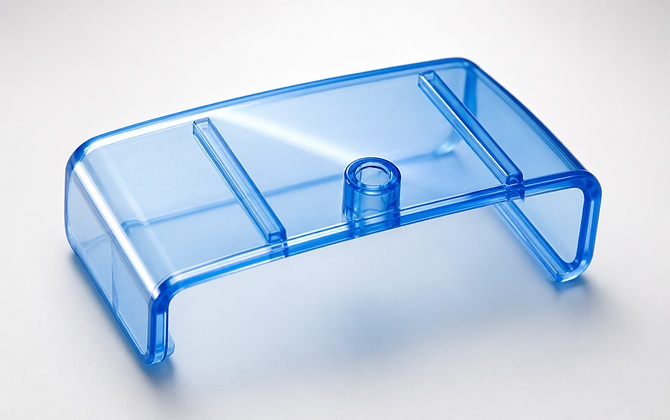
TryCooler manufactures custom clear, tinted and translucent plastic parts from PC, PMMA, PETG, PS and other suitable materials for housings, covers, display windows, lighting components and appearance-sensitive applications.
From DFM and in-house mold manufacturing to injection molding, finishing, assembly and protective export packaging, your project is managed by one coordinated team. We review the material, part structure, visible surfaces and functional requirements before production, helping you move from design validation and T1 approval to repeat orders with consistent project standards.
Transparent Injection Molding Applications
TryCooler manufactures clear, tinted and translucent plastic parts for products that require visibility, light transmission, surface appearance or impact protection. Material and tooling recommendations are developed around the function and operating conditions of each application.

We manufacture transparent housings, display windows and control panel covers for electronic and smart devices. Material selection and mold design are reviewed according to the required visibility, internal component concealment, scratch resistance, assembly fit and exposure to heat or cleaning products.
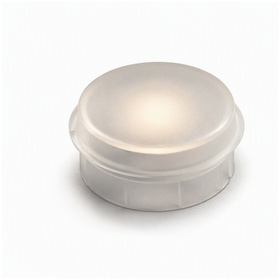
Clear or translucent covers can be produced for LED indicators, lighting assemblies and illuminated controls. We evaluate the material, wall thickness, surface finish and transparent color according to whether your product requires direct light transmission, soft diffusion or a uniform appearance when illuminated.
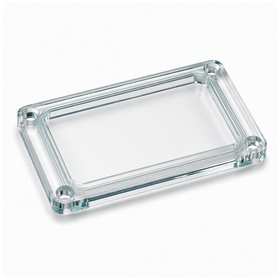
Transparent windows and protective covers allow users to observe meters, fluid levels and internal equipment conditions. Depending on your operating environment, TryCooler can evaluate impact strength, temperature, contact with oil or cleaning agents, sealing areas and screw assembly requirements before tooling.

TryCooler produces transparent and smoke-tinted covers for automotive interiors, appliances and consumer products. We review UV exposure, temperature, impact requirements, color consistency, visible surfaces and long-term assembly stress to help select an appropriate material and manufacturing approach.

Plan Your Transparent Plastic Parts
Compare material options, transparent effects, design considerations and quality checks before starting your transparent injection molding project.
- Transparent Materials
- Clarity & Surface Options
- Design & Tooling Review
- Quality & Acceptance
| Material | Best Suited For | Main Advantages | Points to Consider |
| PC | Protective covers, housings and equipment windows | High impact strength, heat resistance and design flexibility | Requires proper drying and control of residual stress and chemical exposure |
| PMMA | Display windows, decorative covers and high-gloss parts | High clarity, good gloss and outdoor UV resistance | More brittle than PC and sensitive to impact and assembly stress |
| PETG | Clear covers, containers and medical or consumer components | Good transparency, toughness and chemical resistance | Resin grade and processing conditions must be confirmed for the application |
| PS | Clear containers, covers and display components | Good clarity, easy processing and relatively economical | Lower impact and heat resistance than PC |
| SAN | Appliance components, cosmetic packaging and transparent housings | Good clarity, stiffness and chemical resistance | Suitability depends on impact, temperature and chemical-contact requirements |
| Transparent ABS | Tinted housings and appearance parts | Better toughness than standard PS with flexible color options | Usually suited to visual transparency rather than high optical clarity |
| Transparent PP | Containers and chemical-resistant components | Lightweight, good chemical resistance and low moisture absorption | Usually translucent rather than glass-clear |
| Transparent Effect | Visual Result | Typical Applications | How It Should Be Confirmed |
| Clear | Internal components or displays remain visible | Housings, covers and inspection windows | Confirm with the selected resin and actual part thickness |
| High-Gloss Clear | Smooth and reflective transparent surface | Display windows and appearance-critical covers | Approve through the specified mold finish and T1 samples |
| Smoke-Tinted | Dark transparent appearance with controlled visibility | Electronic panels and display covers | Confirm color under powered-on and powered-off conditions |
| Colored Transparent | Transparent color such as blue, red or amber | Indicators, decorative covers and lighting parts | Match using the final material and actual wall thickness |
| Translucent | Allows light through while obscuring internal details | Housings, containers and lighting covers | Confirm the required balance between visibility and diffusion |
| Frosted | Matte transparent or translucent appearance | Decorative covers and privacy components | Approve the mold texture or selected secondary treatment |
| Light-Diffusing | Spreads light to reduce visible bright spots | LED covers and illuminated controls | Evaluate using the actual LED source and assembly |
| Local Gloss and Matte | Different surface effects on one component | Branded housings and control panels | Define surface boundaries clearly before mold manufacturing |
| Review Area | What Should Be Confirmed | Main Risk Being Controlled |
| Visible Surfaces | Critical appearance areas and permitted defect locations | Gate marks, ejector marks and surface inconsistencies in prominent areas |
| Wall Thickness | Consistency between thick and thin sections | Sink marks, bubbles, voids, warpage and visual distortion |
| Gate Location | Gate type, position and acceptable gate residue | Jetting, flow marks, whitening and poorly positioned weld lines |
| Weld Lines | Expected flow paths around holes, ribs and internal features | Visible lines, reduced local strength and sealing problems |
| Parting Line | Mold opening direction and acceptable line position | Visible seams, flash and mismatch on appearance surfaces |
| Draft Angle | Part depth, surface finish and release direction | Scratches, drag marks, deformation and difficult ejection |
| Inspection Item | What We Review | Acceptance Reference |
| Material Verification | Resin manufacturer, grade, color and relevant documents | Approved material specification |
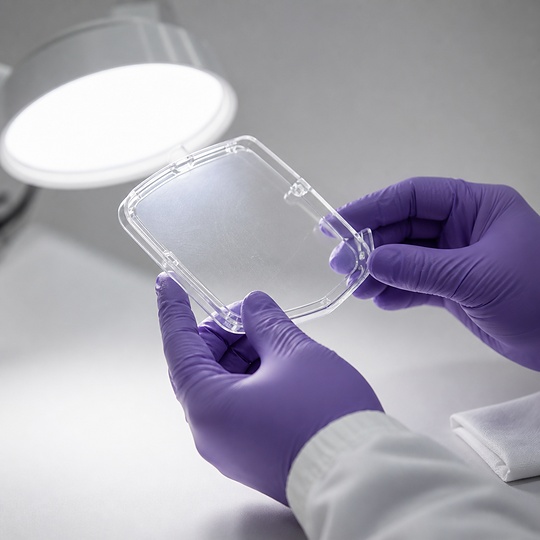
| Visual Appearance | Bubbles, black specks, flow marks, weld lines, haze and scratches | Written appearance criteria and approved sample |
| Transparent Color | Color consistency across actual wall thicknesses | Approved color plaque or molded sample |
| Surface Finish | Gloss, texture and visible tool marks | Specified mold finish and T1 sample |
| Critical Dimensions | Assembly dimensions, hole positions, flatness and warpage | Customer 2D drawing and agreed tolerances |
| Assembly Fit | Snap fits, screw bosses, sealing areas and mating components | Approved assembly or functional requirements |
| Part Weight | Shot-to-shot and cavity-to-cavity consistency | Approved production standard |
| Functional Testing | Impact, sealing, light transmission or chemical exposure when required | Project-specific test method and acceptance criteria |
Testimonials
We needed a clear PC housing with several internal ribs and assembly features, but the visible surfaces could not have obvious gate or ejector marks. TryCooler reviewed the gate position, weld-line location and part structure before tooling. Their DFM feedback helped us manage the main appearance risks while preserving the enclosure’s assembly requirements.
 Daniel CarterMechanical Engineer
Our first PMMA display window looked clear, but the surface gloss still needed adjustment. TryCooler explained what could be improved through mold polishing and what needed to be controlled during transparent injection molding. The next samples were easier for our design team to evaluate, and every change was documented clearly.
 Michael ReynoldsProduct Development Manager
Color matching was a major concern for our smoke-tinted LED cover because its appearance changed with the wall thickness and lighting conditions. TryCooler evaluated the material, sample color and actual LED effect together. This gave our team a much clearer approval reference before moving the parts into production.
 Thomas WalkerLighting Product Engineer
The parts looked good when they left the molding machine, but TryCooler also paid attention to what happened afterward. The clear covers were separated and protected during handling and packing instead of being stacked together. It was a small detail, but it mattered when the shipment arrived without the surface scuffing we had experienced before
 James WilsonSupply Chain Manager
Common materials include clear polycarbonate (PC), PMMA or acrylic, PETG, polystyrene (PS), SAN and selected transparent grades of ABS or PP. Material selection depends on clarity, impact resistance, heat resistance, UV stability, chemical exposure and assembly requirements.
Clear polycarbonate injection molding is suitable for parts requiring higher impact and heat resistance. PMMA injection molding is commonly selected for excellent clarity, surface gloss and outdoor appearance. The final choice should also consider wall thickness, chemical contact, operating temperature and assembly stress.
Yes. Our transparent injection molding service supports crystal-clear, smoke-tinted, colored transparent, frosted and light-diffusing plastic parts. The final appearance should be confirmed using the selected material, actual wall thickness and approved T1 samples.
We reduce these defects through material drying, controlled material handling, clean molding equipment, suitable mold venting and stable processing conditions. Part structure, gate design, residence time and material temperature are also reviewed because transparent plastic defects often have more than one cause.
They cannot always be completely eliminated. During the transparent part of the DFM, we review the gate type, gate position, filling direction, part geometry and venting to reduce visible marks or move them away from critical appearance and light-transmitting areas.
The required mold finish depends on whether the part needs a high-gloss, clear, frosted or light-diffusing surface. High-quality mold steel and precision polishing are commonly used for clear plastic injection molding, while final appearance is confirmed through actual T1 injection-molded samples.
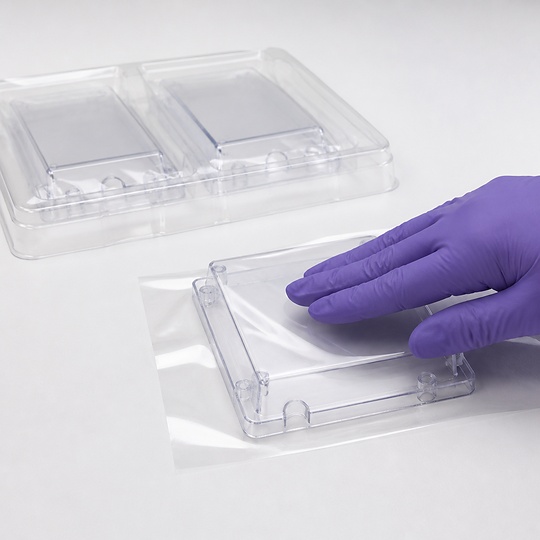
Critical surfaces can be protected through controlled ejection, careful handling and project-specific packaging. Available options include protective film, individual PE bags, separators, foam inserts and custom trays. The packaging method is selected according to the part shape and appearance requirements.